World News

Hot

Post Top Ad

Post Top Ad

Saturday, 5 May 2018

IMD predicts thunderstorm, rain in Delhi, adjoining regions today

May 05, 2018 0

IMD predicts thunderstorm, rain in Delhi, adjoining regions today

As many as 124 people lost their lives due to thunderstorm and lightning in five states earlier this week, the home ministry said quoting figures reported by the affected states.  

IMD predicts thunderstorm, rain in Delhi, adjoining regions
IMD predicts thunderstorm, rain in Delhi, adjoining regions today
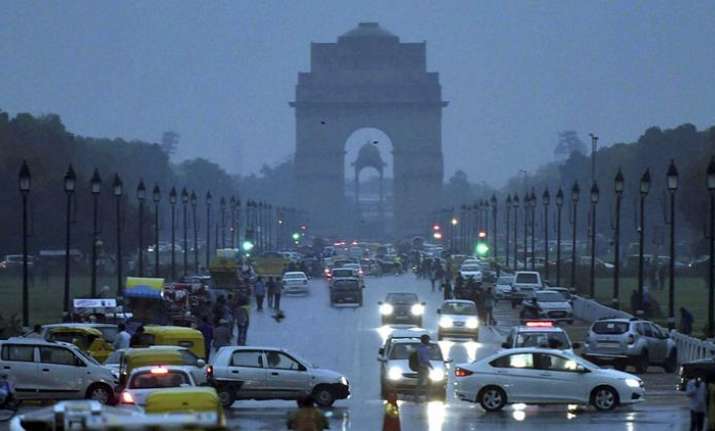
Thunderstorm along with rain is likely in some places of Delhi and adjoining NCR on Sunday, the Home Ministry said.
Quoting an advisory of the India Meteorological Department, a Home Ministry spokesperson said thunderstormand rain would occur over some places in Delhi and adjoining NCR, includingFaridabad, Ballabhgarh, Khurja, Greater Noida, and Bulandshahr today.
As many as 124 people lost their lives due to thunderstorm and lightning in five states earlier this week, the home ministry said quoting figures reported by the affected states.

The highest casualties were in UP, where 73 persons were killed and 91 injured. In Rajasthan, 35 persons were killed and 209 injured in the thunderstorm that, as per the state government’s report, also uprooted 12,000 electric poles and damaged 2,500 transformers.
Prime Minister Narendra Modi on Friday announced ex-gratia of Rs 2 lakh each for the kin of those killed due to dust storm that hit various north Indian states, particularly UP and Rajasthan, on May 2. The Prime Minister also cleared Rs 50,000 each for the seriously injured.
While six persons were killed in Uttarakhand, two lives were lost in Punjab. Another 8 persons died under similar conditions in Telangana.
Read More

Sunday, 29 April 2018

In a first, India, Pakistan, China to participate in multi-nation military exercise in Russia

April 29, 2018 0

In a first, India, Pakistan, China to participate in multi-nation military exercise in Russia

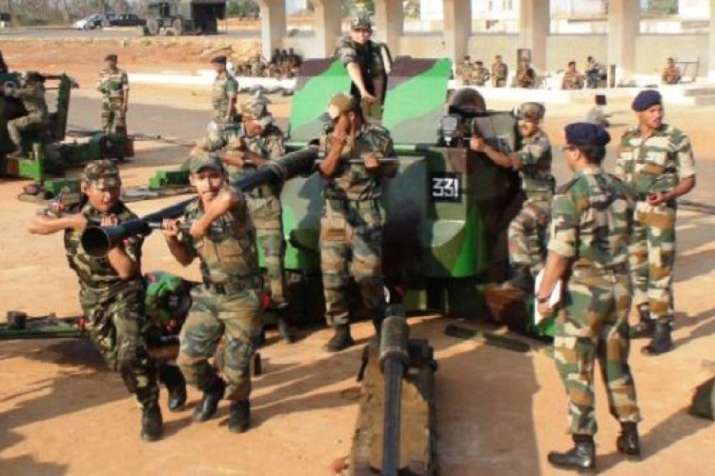
It will be for the first time since Independence that India and Pakistan will both be part of a military exercise, though the armies of the two nations have worked together in UN peace keeping missions, they said.


Photo for representation. 
Photo:PTI
Nuclear-armed neighbours India and Pakistan will be taking part in a multi-nation counter-terror exercise in Russia later this year, reports said. China and several other countries are also likely to participate in the military drill to be held in September under the framework of Shanghai Cooperation Organisation (SCO). 
According to officials, the military exercise will be held in Russia's Ural mountain range where defence forces from eight SCO member nations -  India, China, Pakistan, Kazakhstan, Kyrgyzstan, Russia, Tajikistan and Uzbekistan - will take part. They said that the main of the military exercise named 'Peace Mission' enhance counter-terror cooperation among the member nations.
The officials said India's participation at the exercise was confirmed by Defence Minister Nirmala Sitharaman during a meeting of SCO Defence Ministers' meeting in Beijing last week. 
It will be for the first time since Independence that India and Pakistan will both be part of a military exercise, though the armies of the two nations have worked together in UN peace keeping missions, they said. 

India and Pakistan were admitted as observers of SCO, which was formed in 2001, in 2005. Both the countries were admitted as full members of the bloc last year. 
India's membership was strongly pushed by Russia while Pakistan's entry into the grouping was backed by China. With expansion of the grouping, SCO now represents over 40 per cent of humanity and nearly 20 per cent of the global GDP.

India has been holding military exercise with China. The two countries are likely to resume their bilateral military exercise in September. Last year, the drill was suspended following a tense standoff between their troops in Doklam.
Read More

26/11 Mumbai terror attack case:

April 29, 2018 0

26/11 Mumbai terror attack case: Pakistan removes chief prosecutor for not 'towing govt's line'

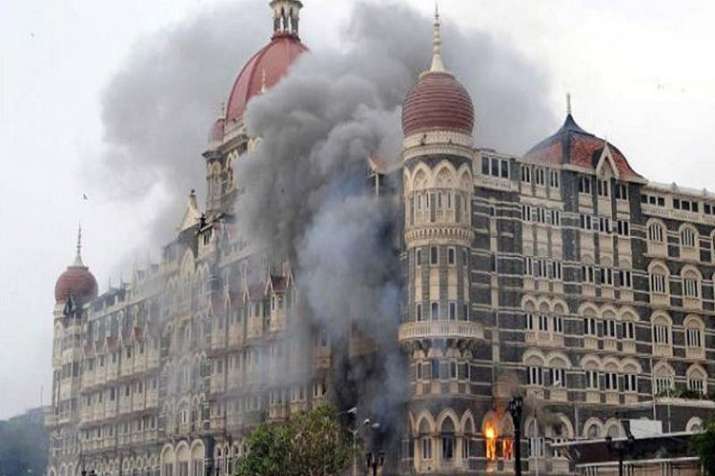
Ten Lashkar-e-Taiba (LeT) terrorists had sailed into Mumbai from Karachi and carried out coordinated attacks, killing 166 people and injuring over 300 in November 2008.

Mumbai's iconic Taj Hotel was attacked by Pakistani terrorists on November 26, 2008. (File Photo/PTI)
Photo:PTI
Pakistan's Interior Ministry has abruptly removed the chief prosecutor from the Mumbai terror attack case for "not taking the government line", an official said on Sunday, in a major setback to India's efforts to bring the perpetrators to justice. 
Ten Lashkar-e-Taiba (LeT) terrorists had sailed into Mumbai from Karachi and carried out coordinated attacks, killing 166 people and injuring over 300 in November 2008. 
"The Interior Ministry has removed Federal Investigation Agency (FIA) Special Prosecutor Chaudhry Azhar, who had been representing as chief of prosecution in the Mumbai attack case since 2009, from the high-profile case," an official of the FIA privy to the development told PTI. 
Azhar has been told that his services in the Mumbai attack case are no more required, he said. 
"Azhar has only been separated from the Mumbai attack case. However, he will continue to representing the state in other cases like Benazir assassination," he said. 
Azhar developed differences with the government over the "manner" the case was being pursued, the official said. 
"The government has its own 'special consideration' in this case and Azhar perhaps is not taking the government line. He was keen to follow the high profile case by book," the official tried to explain the possible reasons of the differences between the chief prosecutor and the ruling PML-N government. 
When contacted, Azhar only confirmed that he was asked to stop pursuing the Mumbai attack case. "I am no more with this case," he said. 
The government offered no explanation of the decision, terming it a routine matter. 
"It seems to be a routine matter. I will have to talk to the relevant persons to know the reason," an official of interior ministry said. 
The Mumbai attack case has entered into the 10th year but none of its suspects in Pakistan has been punished yet, showing that the case had never been in the priority list of the country that appears to be keen to put it under the carpet.
The weekly hearing in this case hardly takes place since the Anti-Terrorism Court (ATC) has completed the statement of all (70) prosecution witnesses. 
According to the prosecution, the case may not further proceed till the Indian government sends its 24 witnesses to Pakistan to record their statements.
Pakistan has written to India in this regard. India replied that Pakistan must put Mumbai attack mastermind Hafiz Saeed on trial based on the evidence it had provided to it.
A number of Pakistani witnesses both official and private testified and provided evidence against the seven accused... but still the Pakistani authorities have been insisting on sending Indian witnesses for reaching a verdict in the nine-year-old case. 
"The Mumbai attack case is being tried in an anti-terrorism court in Islamabad since 2009. There has hardly been any such case in any ATCs in country taking more than nine years and still pending. The ATCs are meant for speedy trial but in this case the ATC is acting like that of a sessions' court where a case is usually not decided in years. 
"It appears that the state is not in a hurry to decide this case since the matter is related to its arch-rival India," a senior lawyer said. 
Had the authorities concerned here been serious, this case would have been decided years ago, he said. 
Seven LeT suspects -- Zakiur Rehman Lakhvi, Abdul Wajid, Mazhar Iqbal, Hamad Amin Sadiq, Shahid Jamil Riaz, Jamil Ahmed and Younis Anjum -- are facing charges of abetment to murder, attempted murder, planning and executing the Mumbai attack since 2009. 
Except Lakhvi, the other six are kept in Adiala Jail in Rawalpindi. 
LeT operation commander Lakhvi got his freedom about three years ago after securing bail. He has been living in an undisclosed location since then. There are reports that he had come to the Jamaat-ud-Dawa headquarters in Lahore last November to greet Saeed on his release from a 10-month detention under terrorism and public safety laws. 
Some 166 people were killed in the attack carried out by 10 LeT men. Nine of the attackers were killed by police while lone survivor Ajmal Kasab was caught and hanged after handed down death sentence. 
The JuD is believed to be the front organisation for the LeT which is responsible for carrying out the Mumbai attack.
Read More

Saturday, 28 April 2018

For the nuclear disarmament of the South and North Korean Peninsula, actively agreed to take support of international community like China and America.

April 28, 2018 0

The agreement between North and South Korea, no war will now be in the Korean Peninsula

For the nuclear disarmament of the South and North Korean Peninsula, actively agreed to take support of international community like China and America.


New Delhi: Today North and South Korea released 'Panamunjom Declaration' for peace, prosperity and integration on the Korean Peninsula. Through this declaration, the two countries decided to end all the military and other conflicts. In addition, in 1953, the ceasefire agreement between the two countries was converted into a peace agreement. I.e. there will be no war now in the Korean Peninsula.

This declaration was signed by North Korean ruler Kim Jong Un and South Korea's President Moon J-Inn. Will work together to reduce military tension on South and North Korean Peninsula and eliminate the threat of war to a great extent.

Resolving the military tensions of the Korean peninsula and solving the atmosphere of war is a very serious matter related to the destiny of the country and it is an important issue to ensure peaceful and stable life for both countries. Agreed to end all hostilities, which is the source of military tension and conflict in all areas including land, sea and air.

Have agreed to create a non-localization area. In order to resolve military issues between the two parties in the south and the north, continuous talks were held with the military officials, including the meeting of the Defense Ministers, and in May they decided to organize military talks with the general.

South and North gradually agreed to realize disarmament because military tensions have been resolved and the mutual military trust has been practically established. An atom-free Korean Peninsula through denuclearization.

For the nuclear disarmament of the South and North Korean Peninsula, actively agreed to take support of international community like China and America. Establishing a strong peace system on the Korean peninsula by ending the current ceasefire is a historic task that can not be delayed anymore.

South and North Korea declared the end of the year of 65 years of ceasefire agreement and converted the Armitos agreement into a peace treaty. President Moon decided to go to Pyongyang this winter in the winter season.


To consult closely with South and North officials and to ensure smooth cooperation between the two sides, agreed to set up an Inter-Korean Joint Contact Office in Kasong. In 2018, they will jointly enter international competitions, including Asian Games.
Read More

पाकिस्तान: 'बच्चों से जुड़ी अश्लील सामग्री' फैलाने के आरोपी को 7 साल की जेल

April 28, 2018 0

पाकिस्तान: 'बच्चों से जुड़ी अश्लील सामग्री' फैलाने के आरोपी को 7 साल की जेल, बरामद हुए 6,50,000 से अधिक अश्लील वीडियो

पाकिस्तानी मीडिया ने बताया कि लाहौर में एक अदालत ने सादत अमीन को स्वीडन, इटली, अमेरिका और इंग्लैंड समेत विश्व स्तर बच्चों से जुड़ी अश्लील सामग्री फैलाने वाले गिरोह का सदस्य होने का दोषी मानते हुए गुरुवार को फैसला सुनाया.


इस्लामाबाद: पाकिस्तान में एक अदालत ने पहली बार बच्चों से जुड़ी अश्लील सामग्री को फैलाने के जुर्म में एक व्यक्ति को सात साल जेल की सजा सुनाई है. अदालत ने उस पर 12 लाख रुपये का जुर्माना भी लगाया है.

पाकिस्तानी मीडिया ने बताया कि लाहौर में एक अदालत ने सादत अमीन को स्वीडन, इटली, अमेरिका और इंग्लैंड समेत विश्व स्तर बच्चों से जुड़ी अश्लील सामग्री फैलाने वाले गिरोह का सदस्य होने का दोषी मानते हुए गुरुवार को फैसला सुनाया.

'एक्सप्रेस ट्रिब्यून' ने बताया कि अमीन को 'संघीय जांच एजेंसी' ने अप्रैल 2017 में पाकिस्तान के सरगोधा शहर से गिरफ्तार किया था. एजेंसी ने उसके पास से बच्चों के 6,50,000 से अधिक अश्लील वीडियो और तस्वीरें बरामद की थीं.

पाकिस्तान ने चाइल्ड पोर्नोग्राफी को 2016 में अपराध की श्रेणी में शामिल कर इसमें सात साल की जेल और मोटा जुर्माना लगाने का फैसला किया था. आपराधिक कानून (संशोधित) अध्यादेश 2015 में नए संशोधन के तहत देश के में बाल तस्करी भी अपराध की श्रेणी में आ गया है.

अगस्त 2015 में बच्चे के यौन शोषण का एक मामला खुलने से देश भर में हड़कंप मच गया था. उस समय पाकिस्तान के पंजाब प्रांत में हुसैन खानवाला गांव में चाइल्ड पोर्नोग्राफी के सैकड़ों वीडियो बनने और वहां से उन्हें दुनियाभर में फैलने का खुलासा हुआ था.
Read More

China, India should be good friends as they are ‘backbone’ of world’s multipolarisation:

April 28, 2018 0

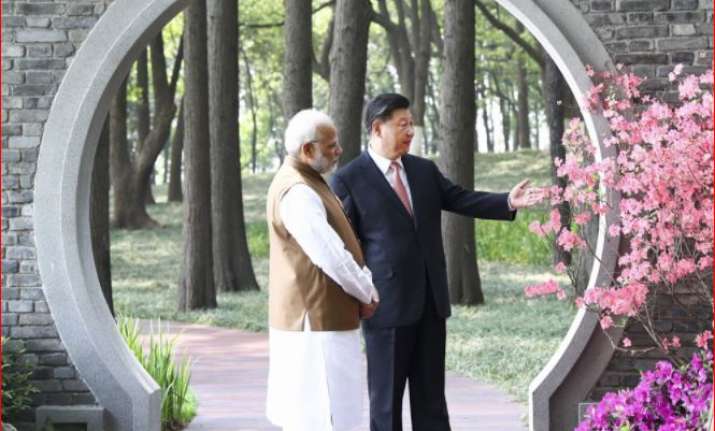
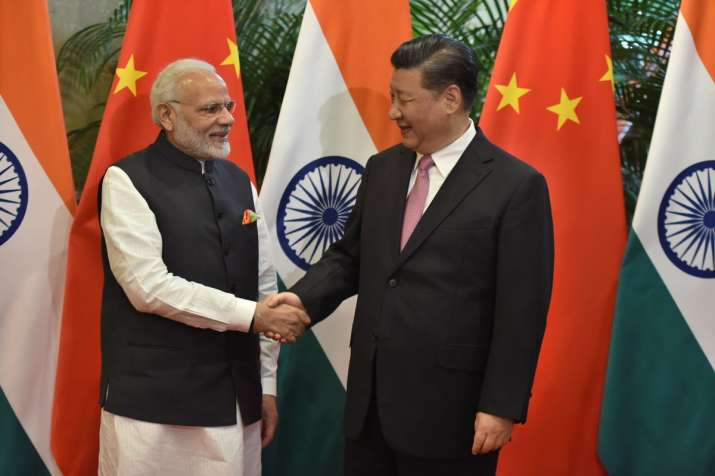
China, India should be good friends as they are ‘backbone’ of world’s multipolarisation: President Xi after informal summit with PM Modi

President Xi said that China and India are both important engines of the world economic growth and the two countries should jointly make positive contributions to the global peace and development.


President Xi with PM Modi
Chinese president Xi Jinping on Saturday said that China and India should be good friends and good neighbours as they are the “backbone” of the world’s multipolarisation and economic globalisation. 
After the conclusion of his informal summit with PM Modi in Wuhan, President Xi said that China and India are both important engines of the world economic growth and the two countries should jointly make positive contributions to the global peace and development. 
“China and India should be good neighbours and good friends. They should regard each other as an ‘active factor’ in the change of world power and be used as a partner to realise their dream of development,” Xi said. 
  “As the two largest developing countries and emerging-market economies with a population level of more than one billion, China and India are the backbone of the world’s multipolarisation and economic globalisation,” he added.
The Chinese president further said that good China-India relationship is an important positive factor in maintaining world stability and is of great significance to the promotion of the development of all mankind.
Xi added that socialism with Chinese characteristics has entered a new era and Modi also proposed the goal of building a “New India”.
He also pointed out that China and India face similar tasks on the road to development and revitalisation. 
 “We must firmly focus on development, deepen mutually beneficial cooperation, and jointly realise national rejuvenation to jointly create a stable, prosperous and prosperous 21st century in Asia and jointly make positive contributions to the world peace and development,” Xi said. 
Xi Jinping further said that the development of China and India is the “trend of the times” and an important opportunity for each other and both China and India should pursue an independent foreign policy.
 “We must adopt a positive, open and inclusive attitude and correctly analyse and view each other’s intentions,” Xi said. 
“China and India have many similar ideas in international affairs. When dealing with relations between major powers, China insists on strategic autonomy, insists on not conflict and confrontation, and building a new type of international relationship that is based on mutual respect, fairness and justice, and win-win cooperation.

“This is in line with the five principles of peaceful coexistence (Panchsheel) jointly advocated by China and India in the 1950s,” the Chinese President said.
The talks between Modi and Xi focussed on diverse areas of India-China cooperation. 
The ‘heart-to-heart’ summit between Modi and Xi is being seen as an effort by India and China to rebuild trust and improve ties that were hit by the 73-day-long Dokalam standoff last year.
Read More

Modi, Jinping want quiet border, to guide armies on averting another Doklam

April 28, 2018 0

Modi, Jinping want quiet border, to guide armies on averting another Doklam

India's Foreign Secretary Vijay Gokhale said the icebreaking meetings between Modi and Xi will have a "positive impact" on a number of thorny issues that have bogged down the two uneasy Asian neighbours.

PM Modi and Xi Jinping
Photo:PTI
Prime Minister Narendra Modi and President Xi Jinping on Saturday pledged to keep the India-China border quiet and personally guide their respective armies to avert Doklam-like military stand-off in future as the two wrapped up their two-day informal summit in the Chinese city of Wuhan.
India's Foreign Secretary Vijay Gokhale said the icebreaking meetings between Modi and Xi will have a "positive impact" on a number of thorny issues that have bogged down the two uneasy Asian neighbours. 
"The two leaders underscored that it is important to maintain peace along India-China border region and decided that they will issue strategic guidance to their respective militaries to strengthen communications and to build trust and understanding," Gokhale said briefing the media on the six rounds of talks between Modi and Xi in two days
They also decided to strengthen existing institutional mechanisms to prevent and manage situations in the border areas. Gokhale said Modi and Xi were of the view that Special Representatives on border talks from both countries will have to intensify their efforts to seek a fair, reasonable and mutually acceptable settlement.
Gokhale said the two leaders reviewed developments in India-China relations from the strategic and long-term perspective and decided to implement various confidence-building measures which had already been agreed upon by the two sides. 
"They also agreed that both sides have the maturity and wisdom to handle the differences through peaceful discussion within the context of the overall relationship, bearing in mind the importance of respecting each other's sensitivities, concerns and aspirations," Gokhale said.
However, Gokhale did not reveal if irritants in Sino-India relations like China's Belt and Road initiative and its opposition to New Delhi's entry into the Nuclear Suppliers Group came up in the the six rounds of talks between Modi and Xi in two days.
Meanwhile, sources said India and China have decided to work on a joint economic project in Afghanistan, a move that could upset Beijing's "all-weather ally" and New Delhi's arch-rival Pakistan, which borders Afghanistan.
India and China went to war in 1962 over their border and still carry the baggage of 3,500 km long disputed boundary.
The two Asian giants almost came to blows in 2017 when their armies faced off each other near their border in Doklam over building of a border road by the Chinese. The already-strained ties went further south after that.
Beijing's opposition to New Delhi's entry into the elite Nuclear Suppliers Group and its application at the UN to declare Pakistan-based terrorist Masood Azhar are other sticking points between the two.

Beijing also fears India might join the Quad -- an emerging bloc of the US, Japan and Australia to counter it in the Indo-Pacific region.
Asked about China's growing influence in the South Asia which is considered India's sphere of influence, Gokhale said: "The two leaders were very clear that we have converging interests. We have our respective visions of domestic and foreign policy that we will work together and use strategic communication to ensure that we are able to improve the situation regionally, internationally."
"The key point is that we identify the number of areas of convergence. 
"They (Modi and Xi) reiterated the importance of building an open, multipolar, pluralist and participatory global economic order which will enable all countries to pursue their development and contribute to the elimination of poverty and inequality in all regions of the world," Gokhale said.
He also said both the leaders recognized the common threat posed by terrorism and reiterated their strong condemnation of and resolute opposition to terrorism in all its forms and manifestations.
Gokhale said this is new kind of diplomatic arrangement between the two countries. "President Xi has not received any foreign leader outside the capital (Beijing)." 
"Both the leaders are trying to find ways to communicate to each other and I have no doubt that this will have positive impact on India-China relations and on moving ahead on a number of issues," the top Indian diplomat said.
Earlier on Saturday, Modi and Xi walked by the East Lake and took a boat ride on the scenic East Lake as they began their second round of talks. The Chinese President also hosted a lunch for Modi.
On Friday, Xi had accompanied Modi on a tour of an exhibition of Marquis Yi of Zeng Cultural Relics and Treasure displayed at the Hubei Provincial Museum. The Chinese President also hosted a dinner in honour of the visiting Indian Prime Minister.
Chinese Ambassador to India Luo Zhaohui said that both the leaders spent nine hours together during the course of their informal summit.
"7 events in 2 days, President #XiJinping and PM Modi spent 9 hours together, covering a wide range of topics in in-depth exchanges with much consensus. Thumbs up to the two leaders!" Luo tweeted following Modi's departure for India from here on Saturday.
Read More

Post Top Ad

Your Ad Spot